Nephilim
Theology · Updated August 15, 2026
Overview
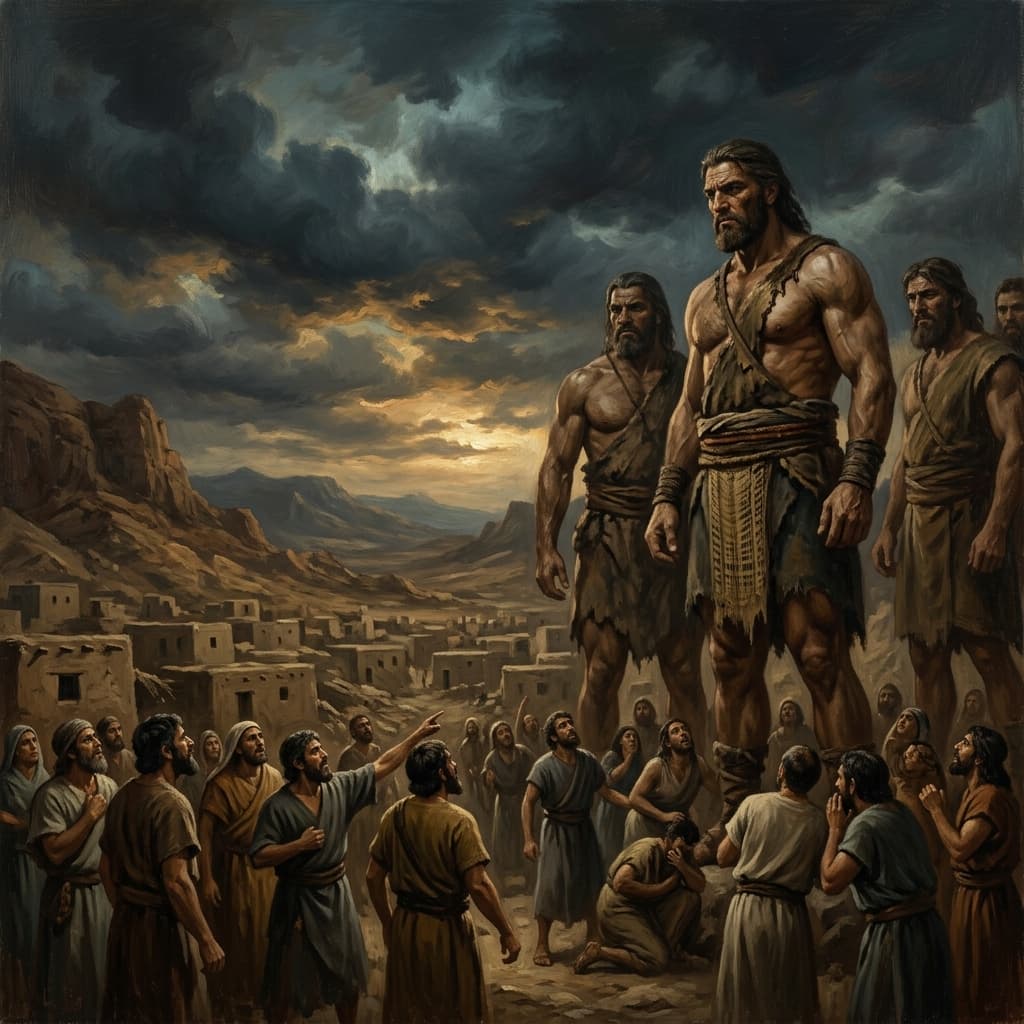
The Nephilim, often identified as giants, appear in ancient Jewish and Christian texts under interpretations ranging from fallen angels to ancient kings. Ancient sources describe them as figures whose origins and nature generated competing readings. Their portrayal differs across sources, with some traditions emphasizing their supernatural qualities and others focusing on their earthly presence and political influence. Some texts present them as literal giants who lived in the ancient world, while others read them as symbolic representations of humanity's moral failings.
The Book of Genesis first mentions the Nephilim in the Hebrew Bible, describing them as the offspring of "the sons of God" and "the daughters of men" in a passage covering six verses. This brief origin story prompted multiple interpretations. The Book of Enoch, a non-canonical Jewish text dated to the third century BCE, offers a more detailed account, depicting the Nephilim as the progeny of angels who descended to Earth and took human wives. The discovery of The Dead Sea Scrolls in the mid-20th century included references to the Nephilim, indicating that ancient Jewish sects at Qumran had their own interpretations of these figures. The Hebrew word "Nephilim" derives from a root that can mean "to fall," which contributed to the depiction of these beings as both "fallen ones" and giants.
Scholars, theologians, and popular writers continue to debate the Nephilim. Interpretations remain divided, with some reading them as historical or mythological giants, while others perceive them as allegorical figures representing corruption or hubris. The Nephilim's nature remains unresolved after centuries of study, reflecting the intersection of divine and human narratives in ancient religious texts. Ongoing archaeological and textual research continues to produce new proposals about their identity.